These requirements apply to all SOLIDWORKS products except where noted. Use this information to ensure you are always working with a SOLIDWORKS-supported and optimized system for hardware, operating system and Microsoft products.
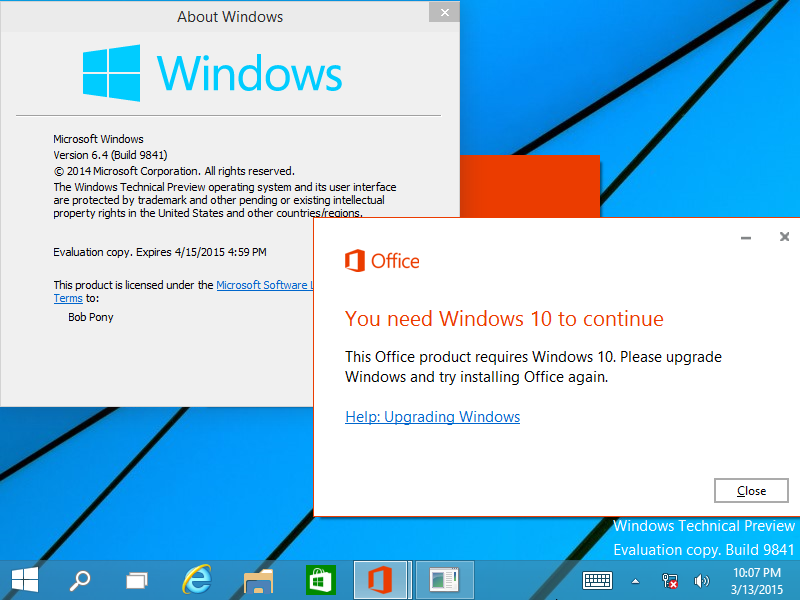
(TL:DR - Office 2019 won't run on Windows 7) It would seem that if you're running Windows 7 and you have an O365 subscription you won't be able to run Office 2019, and because O365 doesn't include downgrade rights, you also won't be able to run the prior version which does support Windows 7. The essentials to get it all done. Office Home and Student 2019 is for students and families who want classic Office apps including Word, Excel, and PowerPoint for Windows 10. A one-time purchase installed on 1 PC or Mac for use at home or school. Microsoft 365 is a subscription that comes with. The Office 2019 client apps also will be released as Click-to-Run only. Microsoft won't be providing a MSI option for Office 2019 clients, but will continue to do so for Office Server products. Office 2019 apps will be supported on: Any supported Windows 10 SAC release; Windows 10 Enterprise LTSC 2019; The next LTSC release of Windows Server; The Office 2019 client apps will be released with Click-to-Run installation technology only. We will not provide MSI as a deployment methodology for Office 2019.
Operating Systems | MS SQL/Office | Hardware & Hypervisors | Antivirus | Support Lifecycle | Notes
Operating Systems
| SOLIDWORKS 2019 (EDU 2019-2020) | SOLIDWORKS 2020 (EDU 2020-2021) | SOLIDWORKS 2021 (EDU 2021-2022) | |
|---|---|---|---|
| Client Products (e.g. SOLIDWORKS) | |||
| Windows 10, 64-bit | |||
| Windows 7 SP1, 64-bit | |||
| Server Products (e.g. SOLIDWORKS PDM) | |||
| Windows Server 2019 | (2019 SP3) | ||
| Windows Server 2016 | |||
| Windows Server 2012 R2 | |||
| eDrawings for Mac | |||
| macOS Big Sur (11.0) | |||
| macOS Catalina (10.15) | |||
| macOS Mojave (10.14) | |||
| macOS High Sierra (10.13) | |||
| macOS Sierra (10.12) | |||
Microsoft SQL and Office
| SOLIDWORKS 2019 (EDU 2019-2020) | SOLIDWORKS 2020 (EDU 2020-2021) | SOLIDWORKS 2021 (EDU 2021-2022) | |
|---|---|---|---|
| MS SQL | |||
| SQL 2019 | SQL 2019 CU4 required | ||
| SQL 2017 | |||
| SQL 2016 | |||
| SQL 2014 | SQL 2014 SP3 required | SQL 2014 SP3 required (End of Life: SW2021 SP5) | |
| SQL 2012 | |||
| MS Office | |||
| Microsoft Excel and Word | 2013, 2016, 2019 (SW2019 SP2) | 2013, 2016, 2019 | 2016, 2019 |
Hardware and Hypervisors

| Hardware | ||||
|---|---|---|---|---|
| Processor | 3.3 GHz or higher | |||
| RAM | 16 GB or more PDM Contributor/Viewer or Electrical Schematic: 8 GB or more | |||
| Graphics | Certified cards and drivers | |||
| Drives | SSD drives recommended for optimal performance | |||
| Hypervisors (Virtual Environments) | ||||
SOLIDWORKS 2019 | SOLIDWORKS 2020 | SOLIDWORKS 2021 | ||
| VMware vSphere ESXi | 6.5 | 6.7 | 6.7 U3 | |
| VMware Workstation | 14 | 15 | 15.5 | |
| Microsoft Hyper-V | 2016 | 2019 | 2019 | |
| Parallels Desktop, Mac | 14 | 14 | TBA | |
| Citrix XenServer | 7.4 | 7.6 | 8.2 | |
| ||||
Antivirus Products
| Guidelines to help ensure SOLIDWORKS installation success and optimal runtime performance | |||||
| |||||
Microsoft/Apple Products Support Lifecycle (SOLIDWORKS 2019 - 2021)
| Products | Start of Support | End of Support1 | |||
|---|---|---|---|---|---|
| Windows 10, 64-bit | SW 2015 SP5 | Active | |||
| Windows 7, 64-bit | SW 2010 SP1 | SW 2020 SP5 | |||
| Windows Server 2019 | SW 2019 SP3 | Active | |||
| Windows Server 2016 | SW 2017 SP2 | Active | |||
| Windows Server 2012 R2 | SW 2014 SP3 | SW 2019 SP5 | |||
| SQL Server 2019 | SW 2020 SP0 | Active | |||
| SQL Server 2017 | SW 2018 SP0 | Active | |||
| SQL Server 2016 | SW 2017 SP0 | Active | |||
| SQL Server 2014 | SW 2015 SP0 | SW 2021 SP5 | |||
| SQL Server 2012 | SW 2013 SP2 | SW 2019 SP5 | |||
| IE 11 | SW 2014 SP3 | Active | |||
| Excel, Word 2019 (64-bit recommended) | SW 2019 SP2 | Active | |||
| Excel, Word 2016 (64-bit recommended) | SW 2016 SP3 | Active | |||
| Excel, Word 2013 | SW 2013 SP4 | SW 2020 SP5 | |||
| macOS Big Sur (11.0) | eDrawings 2021 | Active | |||
| macOS Catalina (10.15) | eDrawings 2020 | Active | |||
| macOS Mojave (10.14) | eDrawings 2019 | Active | |||
| macOS High Sierra (10.13) | eDrawings 2019 | Active | |||
| macOS Sierra (10.12) | eDrawings 2017 | eDrawings 2019 | |||
Microsoft/Apple Products Support Lifecycle (SOLIDWORKS 2018 and older)
| Products | Start of Support | End of Support1 | |||
|---|---|---|---|---|---|
| Windows 8.1, 64-bit | SW 2014 SP1 | SW 2018 SP5 | |||
| Windows 7, 32-bit | SW 2010 SP1 | SW 2014 SP5 | |||
| Windows Vista, 64-bit | SW 2008 SP3.1 | SW 2013 SP5 | |||
| Windows Vista, 32-bit | SW 2008 SP0 | SW 2013 SP5 | |||
| Windows XP, 64-bit | SW 2006 SP4 | SW 2012 SP5 | |||
| Windows XP, 32-bit | SW 2001Plus SP0 | SW 2013 SP5 | |||
| Windows Server 2012 | SW 2014 SP0 | SW 2018 SP5 | |||
| Windows Server 2008 R2, SP1 | SW 2009 | SW 2017 SP5 | |||
| Windows Server 2008 | SW 2008 | SW 2014 SP5 | |||
| SQL Server 2008 R2 | SW 2010 SP4 | SW 2017 SP5 | |||
| IE 10 | SW 2013 SP0 | SW 2016 SP5 | |||
| IE 9 | SW 2011 SP4 | SW 2015 SP5 | |||
| IE 8 | SW 2009 SP5 | SW 2014 SP5 | |||
| Excel, Word 2010 | SW 2010 SP5 | SW 2018 SP5 | |||
| Excel, Word 2007 | SW 2008 SP1 | SW 2014 SP5 | |||
| OS X El Capitan (10.11) | eDrawings 2017 | eDrawings 2018 | |||
| OS X Yosemite (10.10) | eDrawings 2015 | eDrawings 2018 | |||
Notes:
- End Of Support (EOS) corresponds to the last SOLIDWORKS release where a Microsoft product is supported (This is synchronized with the Microsoft Mainstream Support End Date). SOLIDWORKS releases after the EOS are not supported for the said Microsoft product and SOLIDWORKS installation is blocked in the case of an operating system.
- SOLIDWORKS Product Support Lifecycle defines the End Of Support for SOLIDWORKS versions.
- SolidWorks recommends using the latest Microsoft update of Windows, Office and Internet Explorer.
- SolidWorks supports each Windows 10 release for applicable SOLIDWORKS releases as long as it is still covered by both the SOLIDWORKS Product Support Lifecycle and Microsoft Windows Lifecycle Fact Sheet.
- SolidWorks recommends using a Windows Server operating system for all SOLIDWORKS server-based products. Refer to the Microsoft Windows Server documentation to select the Windows Server edition that meets your needs.
- Windows Home Editions and Windows To Go are not supported.
- Apple Mac ® based machines running Windows using Boot Camp are not supported.
- SOLIDWORKS 2018 on Windows 8.1 and Windows Server 2012 R2 requires the Microsoft April 2014 update
- It is not recommended to install any instances of other applications on the SOLIDWORKS PDM Archive or Database Server. For PDM Professional, it is recommended the Archive and Database servers are two separate, dedicated machines.
- SolidWorks does not test or certify VPN (Virtual Private Network) solutions but provides best-effort support. Users may be directed to work directly with their VPN provider to resolve issues on a case-by-case basis.
- Beginning with SOLIDWORKS 2020, DVD distribution media will only be provided on request. Please contact your Reseller.
Office 2019 is the latest version of Microsoft's productivity software that's available as a one-time purchase from a retail store or through a volume licensing agreement.
Important
Microsoft Office 2019 Windows 7
Office 2019 is separate from Office that's available through Office 365 (or Microsoft 365) plans. For example, if you've deployed Microsoft 365 Apps for enterprise (previously named Office 365 ProPlus) to the users in your organization, you don't need Office 2019. You already have all the features, and many more, that are included in Office 2019.
Volume licensed versions of Office 2019 are available for enterprise admins to download and deploy to the users in their organization. This includes the following Office products:
- Office Professional Plus 2019
- Office Standard 2019
- Project Professional 2019
- Project Standard 2019
- Visio Professional 2019
- Visio Standard 2019
These Office products now use Click-to-Run, instead of Windows Installer (MSI), as the installation technology. But, how you activate these Office products – for example, by using Key Management Service (KMS) – remains the same.
Office 2019 for Mac is also available for volume licensed customers. For more information, see Deployment guide for Office for Mac.
What's changed in Office 2019?
The biggest change since Office 2016 is that the installation technology used by the new volume licensed versions of Office is Click-to-Run, instead of Windows Installer (MSI). Click-to-Run has been the installation technology for most Office products since the release of Office 2013.
In addition to Click-to-Run, the following are some other changes that you need to be aware of:
- Office 2019 is supported on Windows 10 but isn’t supported on Windows 7 or Windows 8.1. For more information, review the system requirements.
- To configure and perform installations, you use the Office Deployment Tool, which is a free download from the Microsoft Download Center. The Office Customization Tool that you previously used for Windows Installer (MSI) is no longer used.
- Instead of downloading the installation files from the Volume Licensing Service Center (VLSC), you use the Office Deployment Tool to download the installation files directly from the Office Content Delivery Network (CDN) on the internet.
- When you install Office Professional Plus 2019, all apps are installed by default. But, you can configure the Office Deployment Tool to exclude certain apps from being installed.
- Office 2019 is installed on the system drive, which is usually the C: drive. The installation location can’t be changed.
- You can configure updates to Office 2019, such as security updates and bug fixes, to be automatically downloaded and installed from the Office CDN. Individual downloads for each security update or bug fix aren’t available.

What's stayed the same in Office 2019?
Even though there is a different installation technology, you can still use the same software distribution tools, such as Microsoft Endpoint Configuration Manager, that you currently use to deploy Office. Also, how you activate volume licensed versions of Office – for example, by using Key Management Service (KMS) – remains the same.
The major version of Office 2019 is staying at 16.0, so some additional things are staying the same if you're upgrading from Office 2016, including the following:
- Existing Group Policy settings will continue to work, because the registry location for those settings will still be located in HKEY_LOCAL_MACHINESOFTWAREPoliciesMicrosoftOffice16.0 and HKEY_CURRENT_USERSOFTWAREPoliciesMicrosoftOffice16.0.
- Other registry locations and settings information that reference 16.0 will still apply.
- Add-ins and other extensibility solutions that are compatible with Office 2016 will most likely be compatible with Office 2019 or will require only minimal testing.
What are the new features in Office 2019?
For information about the new features in Office 2019, see the “what’s new” articles for Access, Excel, Outlook, PowerPoint, Project, Visio, and Word. Office 2019 includes some, but not all, features that are available in versions of Office that come with an Office 365 (or Microsoft 365) plan.
Office 2019 won’t receive additional new features now that it has been released. If you want to get new Office features on an on-going basis, you should consider moving to an Office 365 plan (or Microsoft 365) plan that includes Office. Most of these enterprise plans include Microsoft 365 Apps for enterprise (previously named Office 365 ProPlus), which includes the same Office apps as Office Professional Plus 2019. For more information about available plans, see Office 365 plans for enterprises and Microsoft 365 plans for enterprises. For more information about new features, see What’s new in Microsoft 365.
How do I upgrade to Office 2019?
We recommend that you uninstall existing versions of Office before you deploy Office 2019. If you’re uninstalling previous versions of Office products that were installed with Windows Installer (MSI), the Office Deployment Tool can remove most of those products for you as part of the installation of Office 2019. For more information, see Remove existing versions of Office before installing Office 2019.
Microsoft Office 2019 Run On Windows 7
Additional information
- Office Professional Plus 2019 includes Access, Excel, OneNote, Outlook, PowerPoint, Publisher, Word, and Skype for Business.
- There isn’t a new 2019 version of OneNote, but a version of OneNote is installed with Office 2019. For more information, see Deployment guide for OneNote.
- All products in the Office 2019 are available in both 32-bit and 64-bit versions. We recommend 64-bit on computers that have 4 gb or more of memory. But you should assess application compatibility and other factors that might require you to use the 32-bit version. For more information, see Choose between the 64-bit or 32-bit version of Office.
- After downloading the installation files, internet access isn’t required to install, activate, or use Office 2019.
- There isn’t a 2019 version of SharePoint Designer or InfoPath. The last version for both products is 2013.
- Volume licensed versions of Office 2019 aren't supported on Windows 10 in S mode or when using Windows Defender Application Control (WDAC).